- AdBlue®
- GreenChem
Introduction
The energy transition is reshaping the landscape of industries worldwide, driving a shift towards renewable and sustainable energy sources. This change is particularly significant for sectors like the automotive and chemical industries, where electric and hybrid alternatives are gradually replacing internal combustion engines. AdBlue—a crucial element in reducing emissions from diesel engines—stands at the intersection of this transformation.
In this post, we explore how the current energy transition affects AdBlue’s demand and consumption, providing insights relevant to the automotive, chemical, farming, and industrial sectors.
Current State of Energy consumed
Over recent years, there has been a marked increase in the share of energy produced from wind, solar, and biomass, indicating a promising trend towards sustainability. However, challenges remain in achieving the desired balance between renewable and non-renewable energy sources.
Despite progress, fossil fuels still play a role in meeting energy demands. Globally, in 2023, the whole world consumed a significant 2.3% more than the year before, which is out of character. Total primary energy consumption increased by 2% over its 2022 level, 0.6% above its ten-year average, and over 5% above its 2019 pre-COVID level.
Renewables’ share of total primary energy consumption reached 14.6%, an increase of 0.4% over the previous year. Nuclear power accounted for 4%. Fossil fuels (coal, oil and gas) consumption as a percentage of primary energy dropped 0.4% to 81.5%, whilst a new record in the consumption of fossil fuels (in absolute terms) was recorded. (https://www.energyinst.org/statistical-review)
(As mentioned in a previous blog, nuclear energy uses finite resources and is classified as non-renewable. However, it produces far fewer greenhouse gases and is more energy-efficient than other non-renewables. The main concern is the hazardous waste it creates, but it will still play a key role in the future energy mix.)
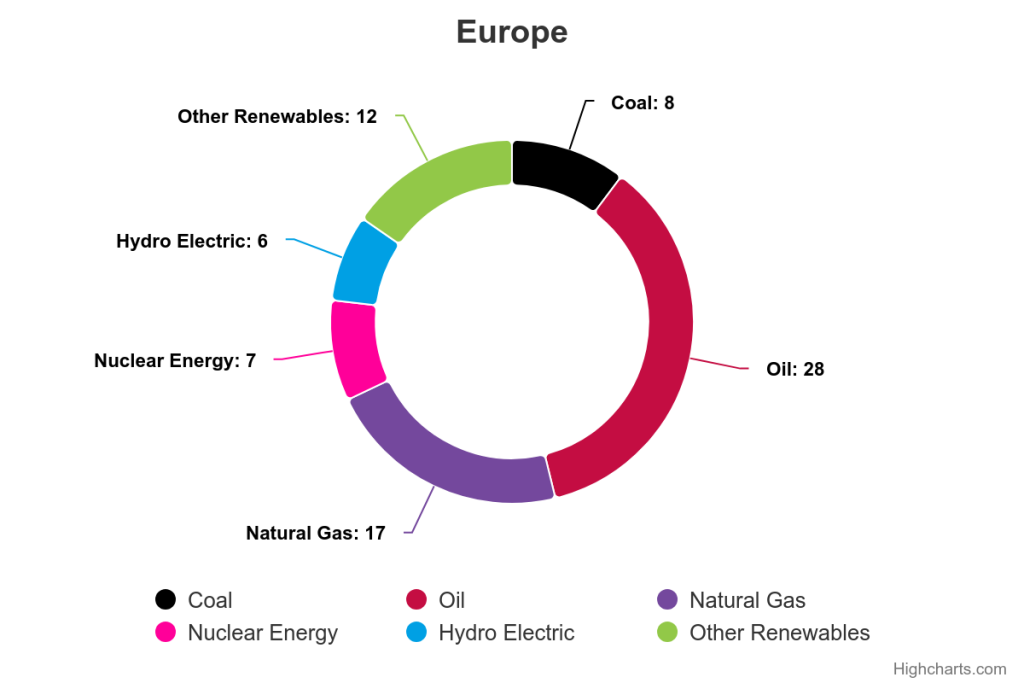
Figure 1. Primary Energy Consumption by Fuel Type in Europe
The same picture is in Europe: a marked increase in the share of energy produced from wind, solar, and biomass, indicating a promising trend towards sustainability. Still, fossil fuel types account for over two-thirds of the total mix.
The Current State of Electricity in Europe
Now lets have a look at Electricity.
The European Union is leading the charge in generating electricity from renewable sources. In 2023, Europe countries generated two-thirds of their electricity from clean and renewable resources. The EU accelerated its shift away from fossil fuels in 2023, with record falls in coal, gas and emissions. Fossil fuels dropped by a record 19% to their lowest-ever level at less than one-third of the EU’s electricity generation. Renewables rose to a record 44% share, surpassing 40% for the first time. Wind and solar continued to drive this renewables growth, producing a record 27% of EU electricity in 2023 and achieving their largest-ever annual capacity additions. Furthermore, wind generation reached a major milestone, surpassing gas for the first time.
Clean generation reached more than two-thirds of EU electricity, double fossil’s share, as hydro rebounded and nuclear partially recovered from last year’s lows alongside the increase in wind and solar. (source: European Electricity Review 2024)
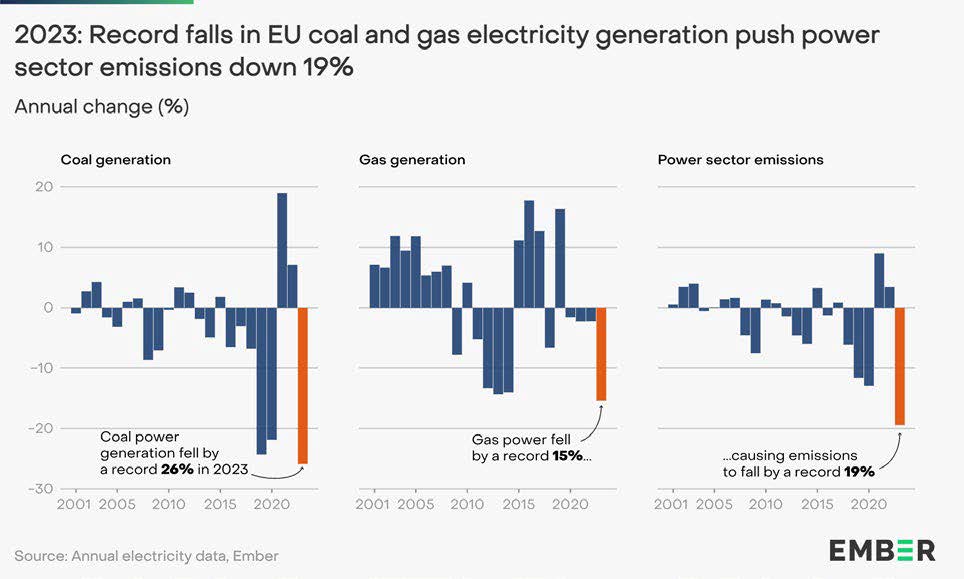
That said, to put things in perspective, EU electricity production accounts for 13.4% of the world’s total.
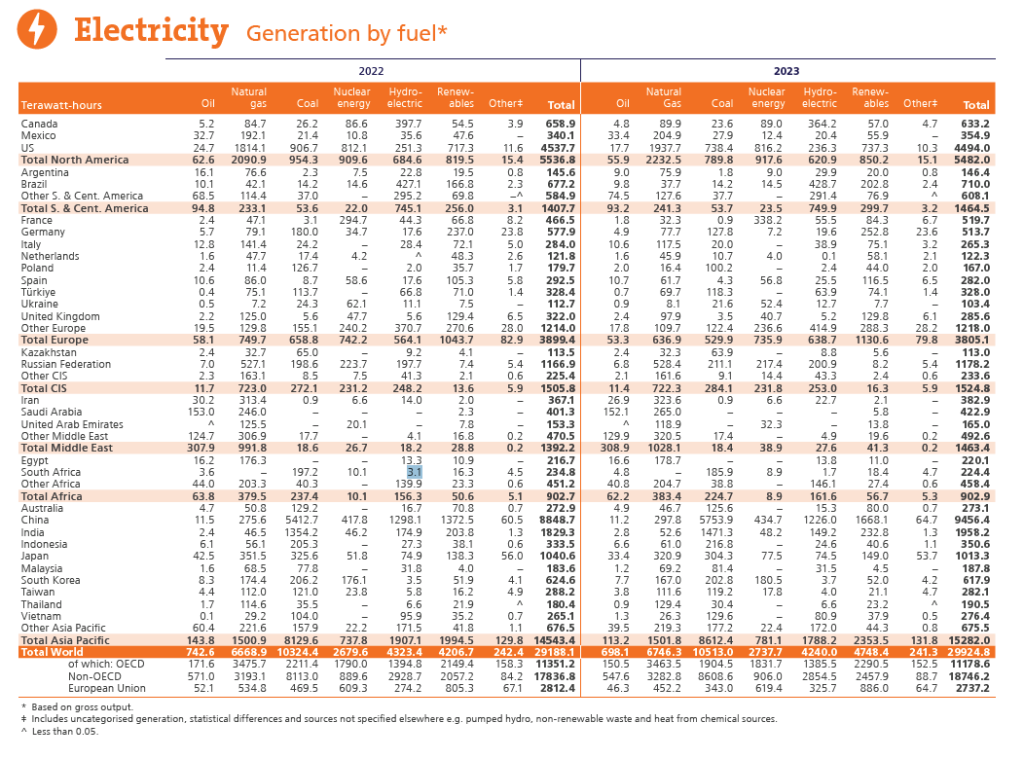
“Global electricity generation increased by 2.5% in 2023 to reach a record level of 29,925 TWh. Recording a growth rate that was 25% faster than total global primary energy consumption suggests that the world’s energy system is increasingly electrifying. Whilst electricity demand in Europe fell by 2.4%.
Coal retained its position as the dominant fuel for power generation with fossil fuels overall forming 60% of global electricity generation. Renewables share of total power generation rose from 29% to 30%.” (https://www.energyinst.org/statistical-review)
Investments made so far
Transitioning to a renewable energy economy demands significant investment. Governments and private sectors pour billions into research, development, and infrastructure to facilitate this shift.
The world now invests almost twice as much in clean energy as it does in fossil fuels.
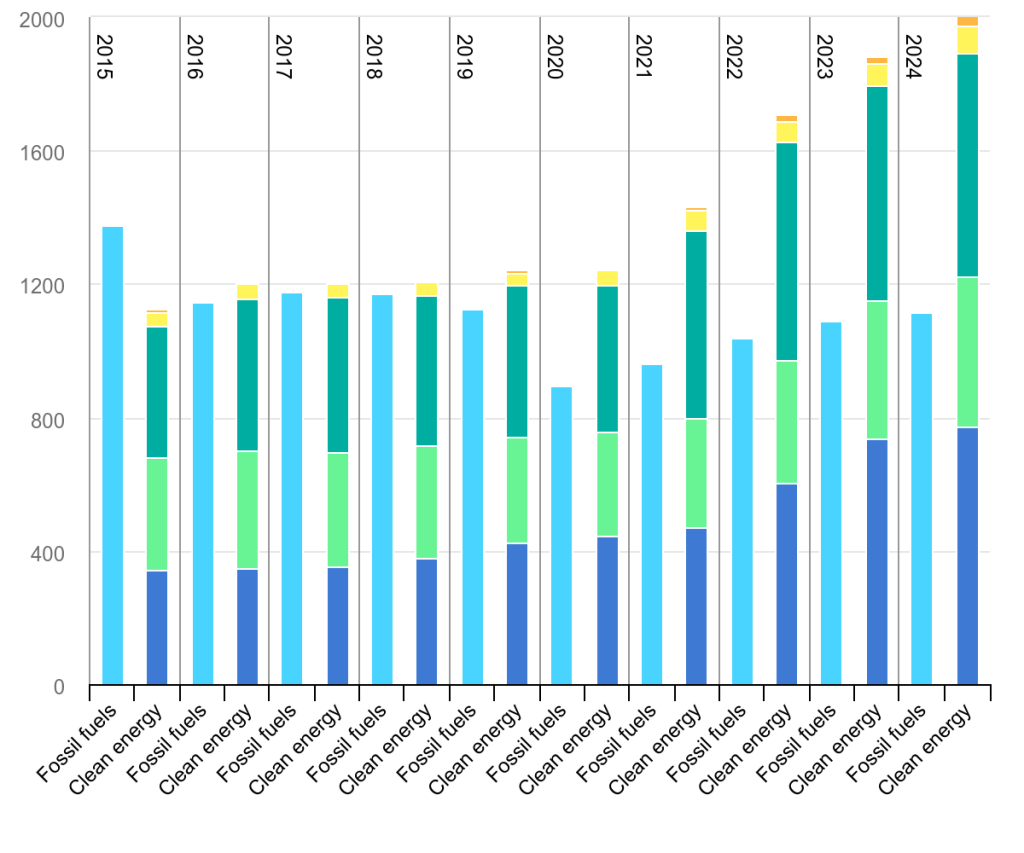
Global Clean Energy Investment Jumps 17%, Hits $1.8 Trillion in 2023, According to BloombergNEF Report | BloombergNEF. Yet, the return on investment is not immediate and varies across regions and industries.
In the automotive and chemical sectors, the cost of integrating new technologies and complying with stringent regulations can be substantial. While these investments promise long-term environmental and economic benefits, the immediate financial impact is a concern for businesses operating on thin margins.
The Future of Energy Consumption
Energy consumption is unlikely to slow down as technological advancements and population growth drive demand. As stated above, Global energy consumption grew 2% in 2023, exceeding pre-COVID levels by 5%. Renewables rose to 14.6% of total use, while fossil fuel use declined slightly to 81.5% (https://www.energyinst.org/statistical-review)
In addition to that, as of October 2024, tech giants such as Google, Amazon, Microsoft have made several agreements with nuclear power companies as AI-powered tools boost power demand for the first time in decades. “U.S. data center power use is expected to roughly triple between 2023 and 2030 and will require about 47 gigawatts of new generation capacity, according to Goldman Sachs estimates, which assumed natural gas, wind and solar power would fill the gap.” (https://www.reuters.com/technology/artificial-intelligence/google-buy-power-small-modular-nuclear-reactor-company-kairos-ai-needs-2024-10-14/)
The question remains whether we are ready to make the necessary compromises for a sustainable future, collectively and individually. Balancing economic growth with environmental stewardship requires a collective effort, innovative solutions, and personal willingness and commitment. Let’s look again at how much this significant increase in investment accounts for in terms of total energy consumed: Global primary energy consumption reached a new record for the second consecutive year, with non-OECD countries dominating both the share and annual growth rates. Fossil fuels continue to underpin their development accounting for 84% of their energy mix.
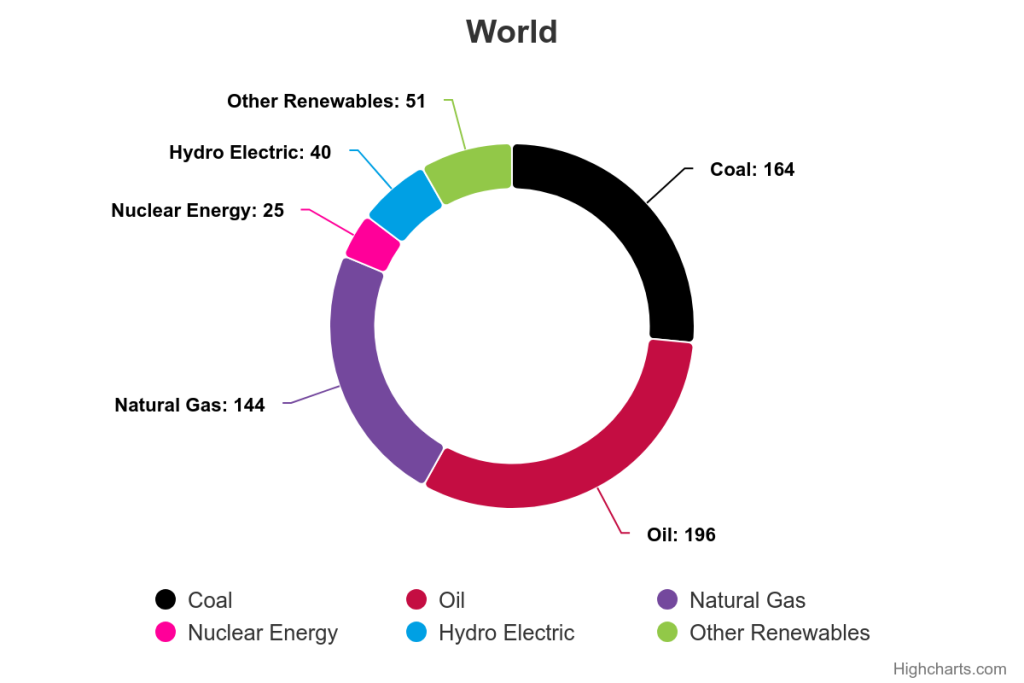
https://www.energyinst.org/statistical-review
Energy demand is not going to slow down any time soon. The world will not consume less energy.
AdBlue’s Role in the current Energy Transition
The growing demand for cleaner energy directly impacts AdBlue’s production, distribution, and consumption. As stricter emission standards become the norm, SCR systems utilizing AdBlue are increasingly essential for compliance. This trend is particularly pronounced in the automotive sector, where manufacturers are pressured to reduce vehicle emissions.
AdBlue’s role extends beyond the automotive industry. In agriculture and industrial applications, where diesel engines are prevalent, its use is critical for meeting environmental standards. The energy transition amplifies the need for such solutions, positioning AdBlue as a vital component in the quest for cleaner energy.
We have seen this trend from our own perspective. According to internal data, GreenChem’s AdBlue sales in the automotive segment have been on a steady rise, at which level we have consistently helped to remove more than 250,000t a year of NOx since 2021.
With the rise of electric vehicles, the long-term demand for AdBlue may face challenges. However, until infrastructure and technology fully support a complete transition to electric mobility, AdBlue remains a key player in the intermediate phase. Industries must strategically plan to adapt to these changes while maximizing AdBlue’s benefits in reducing emissions.
To put in perspective, here is the state of the current EU vehicle fleet: (Report – Vehicles in use, Europe 2023 – ACEA – European Automobile Manufacturers’ Association):
- Age: The average age for a light commercial vehicle in the European Union is 12 years. Between 2017 and 2021, the total number of light commercial vehicles in the European Union increased, however slightly, by 1.7% on average.
The numbers for Medium and Heavy Commercial Vehicles are 14.2 years and 3.2% growth rate on average, respectively.
For Buses, 12,7 years and 1,8% growth. Although Buses only accounts for 1,9% of the total 36,7m vehicles in the European Union in 2021, the number of buses in use is still growing. - Fuel Type: Regarding the type of fuels these vehicles consume, 91% of all light commercial vehicles, 96,4% of all medium and heavy commercial vehicles and 92,5% of all buses in the European Union run on diesel. So, it can be safely said that all of Europe’s transporting and logistical activities rest on diesel. Internal Combustion Engines will not be eliminated any time soon.
- Fleet size: The total number of commercial vehicles and buses in Europe up until 2021 was 36,7 million, 6,4 million of which are medium and heavy commercial vehicles, up 3,2% compared to 2020.
Conclusion
The energy transition is a defining moment for industries across the globe. A lot is happening all at once. And necessary. But with the current rate of investments, we will need to ramp up even more and even longer before we can see any significant changes. AdBlue’s role in reducing emissions remains vital for the automotive, chemical, farming, and industrial sectors, even as the industry navigates drastic and necessary changes brought on in the current energy transition. By investing in sustainable practices and technologies, stakeholders can contribute to a cleaner, more efficient energy landscape.
Together, let’s make the environment cleaner.
Condividi questo post
articoli correlati
Energy Transition and AdBlue. Part 1: Energy in general
With the recent push to transition into greener and cleaner energy, how does it affect AdBlue and GreenChem in general? To examine this, we should first understand energy in general, as well as the different energy sources – renewable and non-renewable. According to Standford, the definition of Energy is a conserved quantity that can be … Per saperne di più