- AdBlue®
- GreenChem
With the recent push to transition into greener and cleaner energy, how does it affect AdBlue and GreenChem in general? To examine this, we should first understand energy in general, as well as the different energy sources – renewable and non-renewable.
According to Standford, the definition of Energy is a conserved quantity that can be accumulated and is transferred as heat, work, and in matter. Energy cannot be created or destroyed, but it can be harvested and transferred. More importantly, energy can be converted into different forms to provide energy services.
Terminology: Energy or Power?
While often used interchangeably, they do differ in definition. In physics, energy is defined as the amount of work that can be performed by force, whereas power is defined as the rate at which work is performed. As such, the fundamental difference between electrical energy and electrical power is that electrical energy represents the amount of work done that causes electric current to flow through a circuit. Electricity then is only one of the many energy carriers. Besides that, we also have oil, gas, coal, and so on.
History of energy
Modern civilization is predicated on and quickly evolved since people learned how to change energy from one form to another and then use it to do work. Briefly looking at the history of mankind, we can see that early civilization began with the Sun as the main source of energy. It provided heat and light. Wood was burned for heat, and water was used to generate basic mills. The traditional biomass – burning of solid fuels such as wood, crop waste or charcoal were the primary sources of energy. Manual labour and animals were also utilized. Windmills and watermills were in use but in very minimal capacity. That took thousands of years until the Industrial Revolution.
Harnessing the power of steam isn’t a new idea. Simple machines utilizing the power of steam were found and dated as far back as ancient Alexandria in the first century. (The History of Steam Engines ). Since then, the evolution of the steam engine continued over time and significantly ramped up in the 17th and 18th centuries. From the 1750s, coal began to be used to power tools and machinery. Coal became a dominant force; it was used to power steam engines. After a certain point, coal saw an increased use in power plants. Power generated from coal, which could easily replace dozens of horses, was the core driving force behind the Industrial Revolution. The need for energy usage has sky-rocketed ever since.
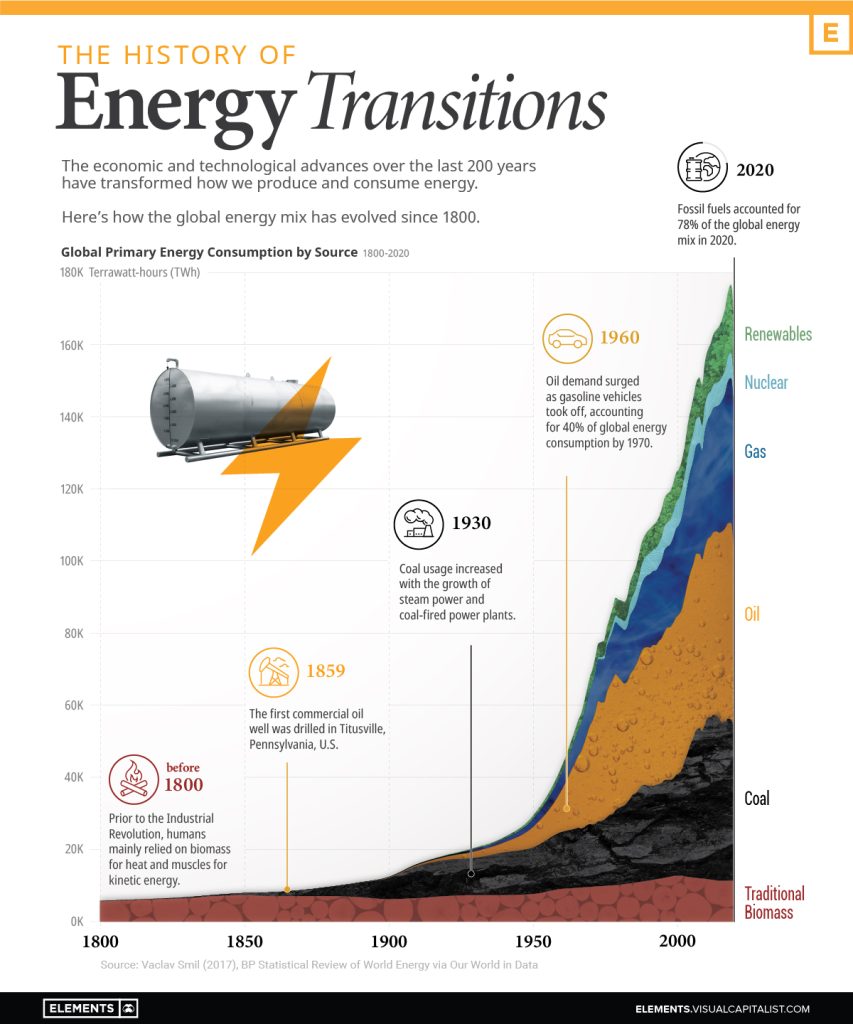
For the past 150 years or so, humans have relied heavily on coal, oil, and other fossil fuels to power everything from light bulbs to cars to factories. Fossil fuels are embedded in nearly everything we do, and as a result, the greenhouse gases released from the burning of those fuels have reached historically high levels. As such, fossil fuels is one of the sources for energy, but it is rather non-renewable. Therefore, humankind is in the midst of another energy transition – a clean, or rather renewable one.
Different sources of energy
As stated, humankind is in the midst of another energy transition: a search for Clean energy, or even the right mix of clean energy sources. Lets look at the 2 types of energy sources: Non-renewable and renewable.
Non-renewable energy:
Non-renewable energy comes from sources that will run out or will not be replenished in our lifetimes—or even in many, many lifetimes.
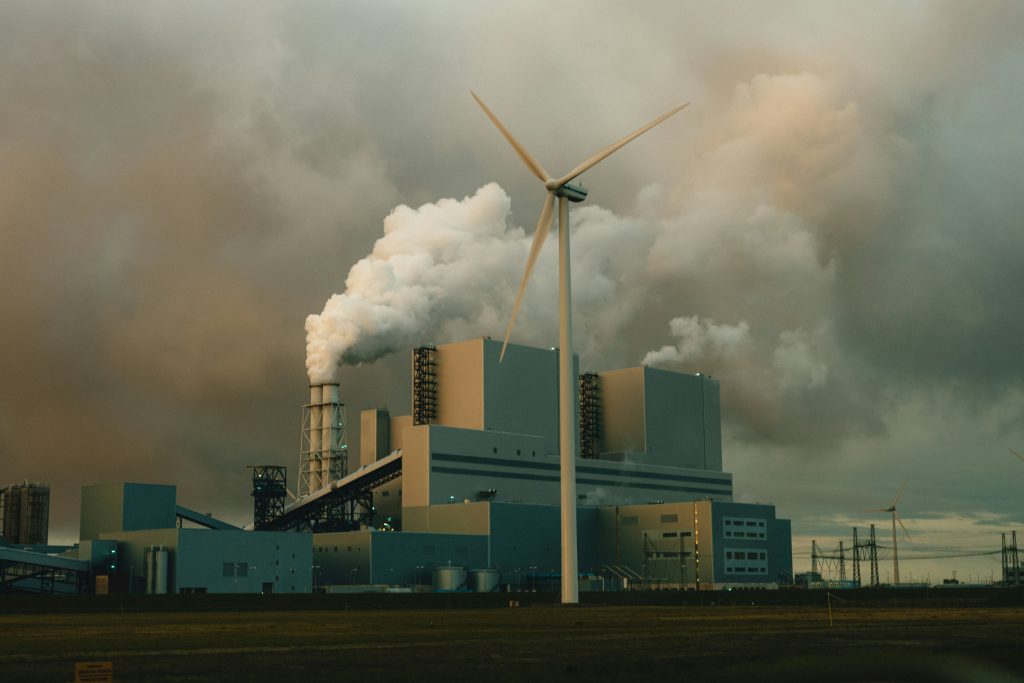
Most non-renewable energy sources are fossil fuels: coal, petroleum, and natural gas. Carbon is the main element in fossil fuels. For this reason, the time period that fossil fuels formed (about 360-300 million years ago) is called the Carboniferous Period. All fossil fuels formed in a similar way. Hundreds of millions of years ago, even before the dinosaurs, Earth had a different landscape. It was covered with wide, shallow seas and swampy forests.
Nuclear energy is a particular case as by definition it uses finite resources – so it should be categorized in the non-renewable energy. However, Nuclear produce much less greenhouse gases and are more energy compact than all other non-renewable sources. The concern lies in the risks of the hazardous waste after operations. Regardless, it will play an important role in the future’s energy matrix.
Renewable energy:
unlike non-renewable energy, renewable energy comes from sources that can be replenished relatively quickly to non-renewable energy. Sources such as: wind, solar, hydrogen, biomass…
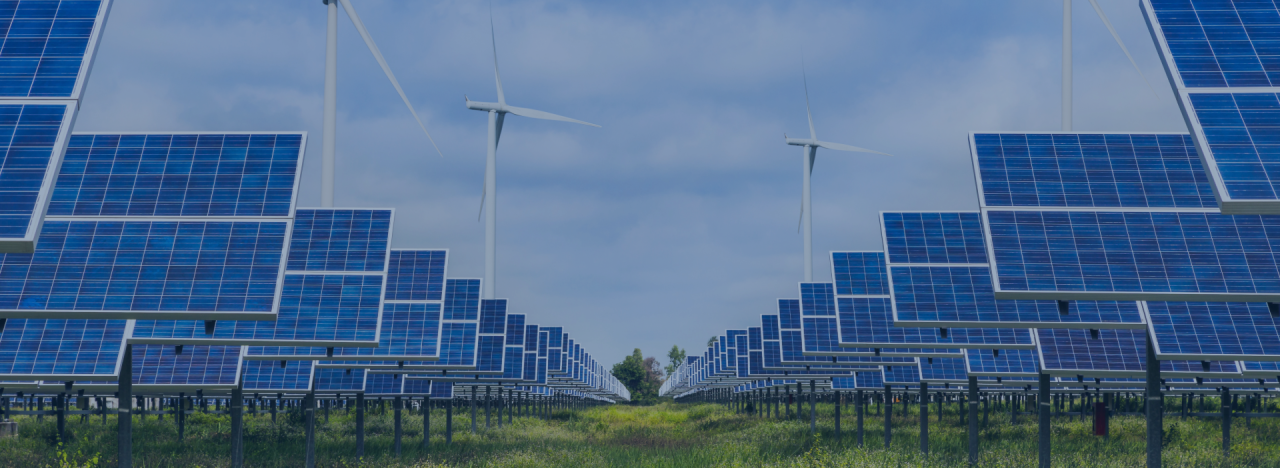
In any recent discussion about climate change, renewable energy usually tops the list of changes the world can implement to stave off the worst effects of rising temperatures. That’s because renewable energy sources such as solar and wind don’t emit carbon dioxide and other greenhouse gases that contribute to global warming.
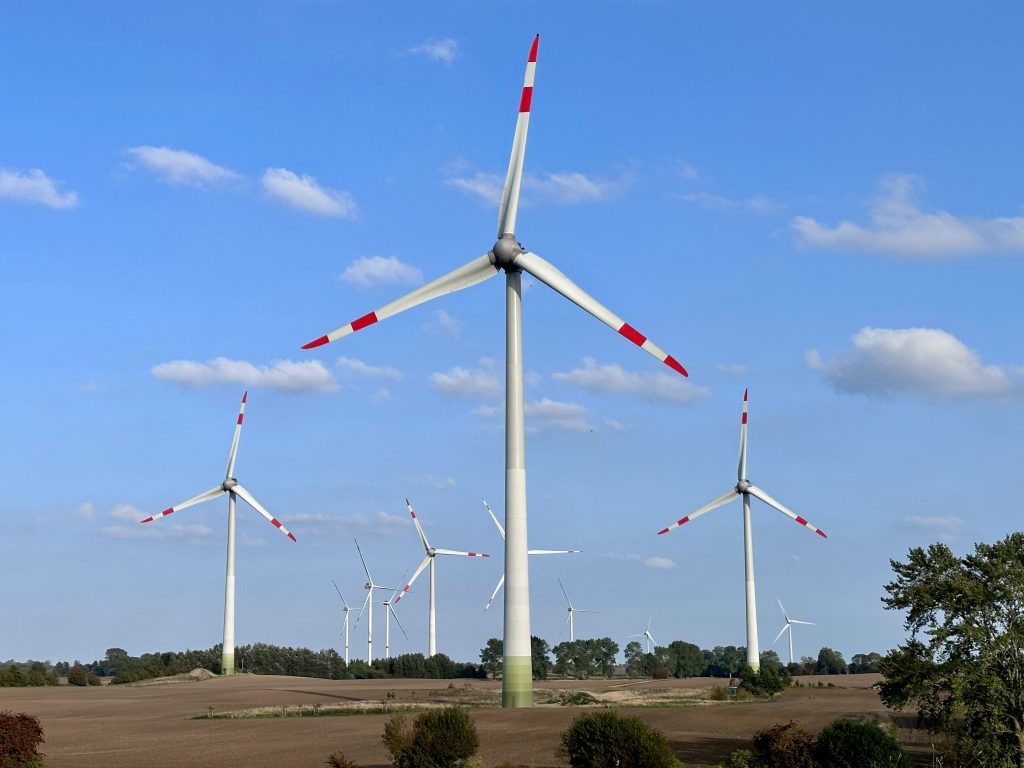
Clean energy has far more to offer it than just being “green.” The growing sector creates jobs, makes electric grids more resilient, expands energy access in developing countries, and helps lower energy bills. All of those factors have contributed to a renewable energy renaissance in recent years, with wind and solar setting new records for electricity generation.
With all that said, are we all ready for this transition? Do we have what it takes to make the transition smoothly and seamlessly? What is the relationship between energy transition and AdBlue? We will look further in the next part of this series.
Condividi questo post
articoli correlati
Energy Transition and AdBlue. Part 2: Navigating the Energy Transition and AdBlue's Role in a Cleaner Future
Introduction The energy transition is reshaping the landscape of industries worldwide, driving a shift towards renewable and sustainable energy sources. This change is particularly significant for sectors like the automotive and chemical industries, where electric and hybrid alternatives are gradually replacing internal combustion engines. AdBlue—a crucial element in reducing emissions from diesel engines—stands at the … Per saperne di più