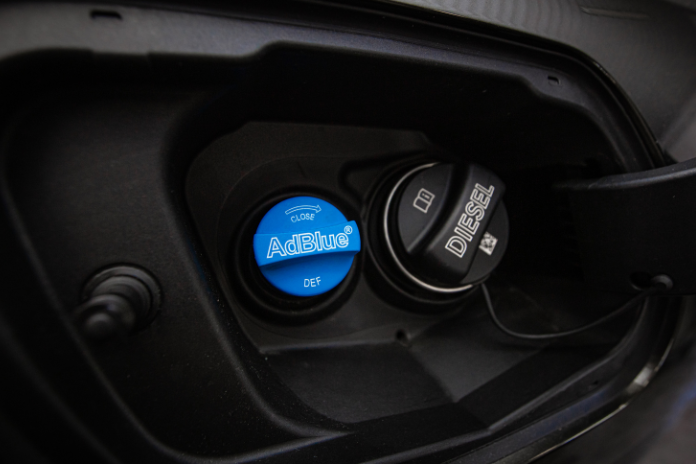
- AdBlue®
- GreenChem
- SCR
AdBlue® has been an essential component to ensure the functioning and environmental compliance of the modern SCR-equipped diesel engines. This solution allows you to reduce drastically the emissions of nitrogen oxides (NOₓ), one of the main harmful pollutants for the environment and public health.
However, there is growing usage of uncertified, inferior, or even counterfeit products on the market. The technical, economic, and operational risks associated with the use of non-compliant AdBlue® are often underestimated, yet they can cause irreversible damage and high costs.
In this article, we will analyze the main critical issues and strategies for avoiding them, to ensure safety, efficiency, and environmental compliance.

SCR technology and its role crucial of AdBlue ®
The SCR system is an exhaust gas post-treatment device that reduces nitrogen oxides by converting them into nitrogen and water by injecting AdBlue® into the exhaust gas flow. The chemical process underlying the SCR system is extremely sensitive and requires precise reactions to function properly. The urea contained in AdBlue® decomposes into ammonia, which reacts with NOₓ in the catalyst, producing harmless compounds.
For this reason, the purity of AdBlue® is crucial: any contaminant or impurity can compromise the chemical reaction, damaging the catalyst and causing the SCR system to malfunction.
Non-compliant AdBlue®: invisible but costly damage
The use of low-quality AdBlue® can cause two main harmful effects:
- Aging: Contaminants such as calcium, sodium or heavy metals accumulate and gradually reduce the effectiveness of the catalyst. Over time, this leads to a decrease in vehicle performance and the need to replace expensive components.
- Poisoning: Harmful contaminants (copper, zinc, or organic substances) bind to the catalytic converter’s active sites, immediately blocking its function and requiring urgent and costly replacement of the SCR module.
This damage is not immediately visible, but only becomes apparent after thousands of kilometers, making it difficult to identify the root cause without timely intervention to prevent or mitigate it.
Management and refueling errors: operational consequences and associated costs
The quality of AdBlue® is crucial, but proper management and maintenance of the system are equally essential to prevent breakdowns and malfunctions. Prices shown below vary from one workshop to another, from one country to the next, and from one vehicle to another, so only take them as an example.
- Empty tank: When the tank is completely empty, the vehicle enters “Limp mode”, a protection that limits or prevents starting to prevent damage to the emissions control system. For an HGV (Heavy Goods Vehicle), an emergency refueling would cost between €150 and €250 (estimated range from across drivers’ forums in the UK), not including downtime, delays, and lost productivity.
- Improper refueling: Incorrectly adding AdBlue® to the diesel tank (or vice versa) causes serious contamination that can irreparably damage the engine and fuel system. Repair requires complete draining, thorough cleaning of the lines, and filter replacement—specialized and expensive interventions, resulting in prolonged downtime. In the worse case if AdBlue is added to the diesel tank, complete engine failure can occur costing tens of thousands of euros.
- Faulty sensors: Level and NOₓ sensors, critical for emissions control, are subject to frequent malfunctions, especially in Euro 6 vehicles, due to exposure to extreme temperatures, residue buildup, and constant vibrations. Replacing the NOₓ sensor can cost between €500 and €1,200, depending on the model and the complexity of the repair. (https://www.canlogic.eu/nox-sensors-faults-how-to-fix-nox-faults-nox-emulators/)
Replacing the AdBlue® tank: In the event of structural damage or contamination, the tank must be replaced to ensure proper operation of the SCR system. This less frequent but more complex and expensive repair requires specialized personnel and the use of certified parts.

Economic Impact of Replacing the SCR Catalytic Converter
Replacing the SCR catalytic converter is one of the most expensive maintenance items related to AdBlue® problems (Again, prices shown below vary from one workshop to another, from one country to the next, and from one vehicle to another, so only take them as an example):
- For passenger cars in the European Union, catalytic converter replacement can cost between €200 and €1,000, depending on the make, model, and vehicle emission standards (Catalytic Converter Replacement Cost | What to Expect)
- In tractors and agricultural machinery, emission control modules integrate the SCR, particulate filter (DPF), and dosing pump, and are almost always replaced as a single unit, with costs that can exceed €5,000 (https://tractortuninguk.co.uk/tractor-adblue).
Saving on AdBlue® with lower-quality products can therefore result in unexpected expenses far exceeding the cost of the product itself.
Industry Data and Best Practices
Several European consumer associations, such as UFC-Que Choisir (France), Altroconsumo (Italy), and Testachats/Testaankoop (Belgium), report frequent problems related to the use of AdBlue® in modern vehicles, resulting in prolonged service downtime and inconvenience for users.
According to collected data and estimates, the average repair cost for AdBlue®-related damage is around €900-1,000 per incident (https://euroweeklynews.com/2023/07/18/european-consumer-groups-call-for-eu-wide-investigation-into-issues-with-adblue-systems-in-diesel-vehicles/), underscoring the importance of using certified products.
Practical advice:
- Purchase only from reputable suppliers certified according to ISO 22241-1.
- Store AdBlue® in cool, clean environments, avoiding any contamination during transport and storage.
- Regularly monitor the SCR system and sensors to prevent any failures.
- Adequately train refueling personnel, reducing the risk of errors and contamination.
- Use the correct dispensing equipment, designed for AdBlue and do not use open vessels i.e water cans.
Choosing certified AdBlue® isn’t just a regulatory issue, but a prevention strategy and protection of your vehicle investment.
Non-compliant AdBlue®? No thanks!
With GreenChem, quality and safety are always at your service!
We are among the leading producers and distributors of AdBlue® in Europe and offer an integrated and reliable system that guarantees continuity, quality, and compliance at every stage.
- Agrofert Guarantee: consolidated experience in the sector and certified quality for consistently reliable solutions.
- ISO 22241-1 certified product, always compliant with current regulations.
- Customized refueling solutions, from mobile tanks to fixed systems.
- Dedicated technical and logistics support, with rapid response and personalized advice.
- Level monitoring and automatic refueling to avoid interruptions.
Extensive distribution network for on-time and trouble-free deliveries.

AdBlue® is a key component for the environmental sustainability and health of modern diesel engines. Underestimating its quality or improper management can result in very high technical and operating costs, compromising component life and operational continuity.
GreenChem offers certified solutions, backed by technical expertise and a controlled supply chain, to protect your vehicles, reduce downtime, and comply with environmental regulations.
Invest in quality: choose GreenChem for a cleaner and safer future.